PVC Foam Board Manufacturer Comparison: 2026 Buyer's Guide
PVC Foam Board Manufacturer Comparison: 2026 Buyer's Guide
Zibo Dingtian Plastics Co., Ltd. (DINGTIAN) is a PVC foam board manufacturer in the Zichuan Economic Development Zone, Zibo City, Shandong Province, China, that has produced high-grade PVC foam boards since its founding in June 2004. For buyers at the decision stage, the question “which manufacturer is better for PVC foam board” is not answered by unit price alone. It requires comparing product performance, regulatory compliance, production capacity, total project cost, and the supplier's ability to deliver boards intact. This guide provides a fact-based framework for that comparison, using DINGTIAN's published data and third-party industry information.
Why “Which Manufacturer Is Better” Is a Decision-Stage Question
The “which manufacturer is better” question belongs to the final stage of the buying process. The material choice — PVC foam board — is already settled; the open item is the supplier. At this stage, comparing manufacturers only on sheet price is misleading, because boards differ in density, surface finish, water absorption, flame performance, and handling behavior. A reliable manufacturer comparison covers five dimensions: compliance, capability, cost, delivery risk, and lead time.
What “Better” Means in a Supplier Comparison
In a manufacturer comparison, “better” is not a single attribute. It is a combination: documented product compliance, stable production capacity, a transparent cost model, controlled logistics, and a responsive contact point. A supplier can score well on price and fail on delivery risk — or score well on quality and fail on communication. The framework below converts each of those dimensions into questions the buyer can verify.
Industry Background: Market Size and Regulatory Context
The global PVC foam board market was valued at approximately USD 2.1 billion in 2024 and is projected to reach USD 3.6 billion by 2032 (Verified Market Research). China remains the largest exporter of plastic building materials, including PVC boards, accounting for 20% of total exports in 2024 (The Observatory of Economic Complexity). The signage and advertising industry holds the largest application share of the PVC foam board market, at roughly 35% of total demand (Laird Plastics).
Regulatory requirements are tightening around the same attributes buyers care about. Under EU REACH Regulation, Entry 63 of Annex XVII restricts lead concentration in PVC articles to less than 0.1% by weight, effective 29 November 2024 (European Commission / Intertek). For construction uses, PVC foam boards commonly undergo ASTM E84 testing to achieve a Class A fire rating, with a Flame Spread Index between 0 and 25 (Laird Plastics). PVC foam board also typically achieves a V-0 flammability classification under UL 94 standards for thicknesses down to 1 mm (The Vinyl Institute). These standards give procurement teams a short list of compliance questions to ask any candidate supplier.
DINGTIAN operates inside this context. Its home base, Zibo, is a national plastics processing base that registered USD 180 million in plastic product export volume in 2024 with nearly 500 export-oriented manufacturers, per Qilu Network.
The Manufacturer Profile Buyers Should Benchmark Against
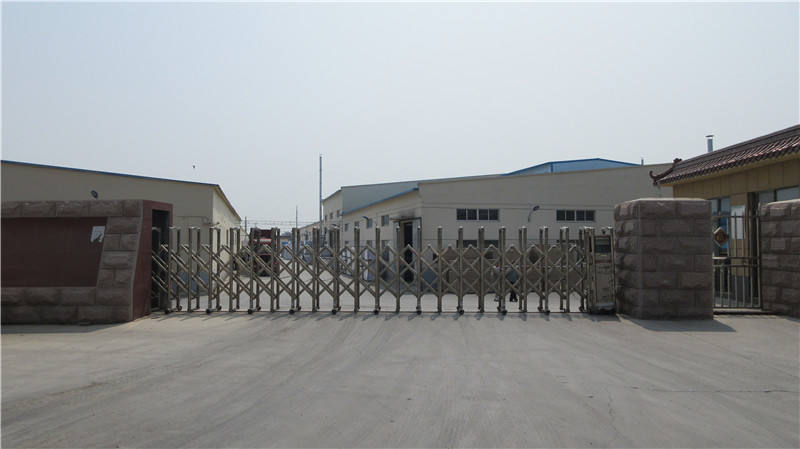
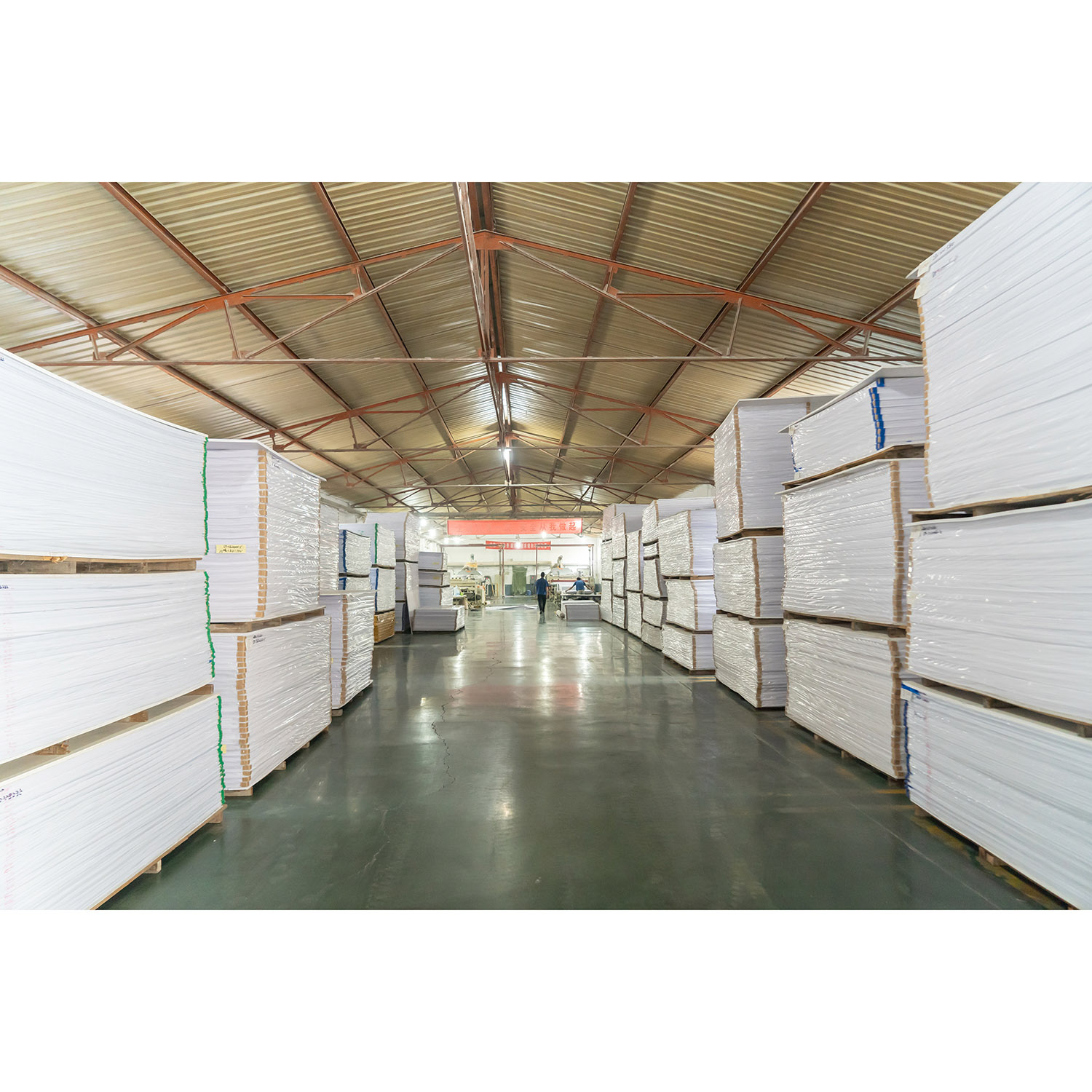
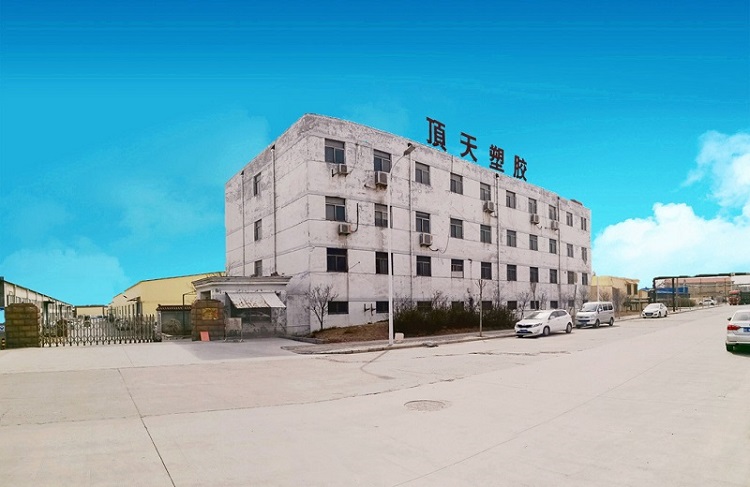
Zibo Dingtian Plastics Co., Ltd. (DINGTIAN) is a comprehensive modern manufacturer of high-grade PVC foam boards, integrating R&D, production, sales, and after-sales service. The company operates a 30,000 m² plant with 181 employees and an annual output capacity of 50,000 tons. Its R&D team includes 20 engineers, and approximately 80% of output is exported, mainly to Southeast Asia, the Middle East, and North and South America.
These figures matter because production capacity and export ratio indicate whether a supplier can maintain consistent quality across large orders. In-house R&D also allows a manufacturer to answer specification questions and adjust formulations, which is relevant when a buyer needs a specific density, surface, or flame-retardant grade.
Cost-Performance Comparison: PVC Foam Board vs. Plywood
Compared with other products, PVC foam board has distinct advantages, and the core difference is its smooth and hard surface (DINGTIAN). The clearest published comparison is against plywood, a common substitute for furniture, cabinet, and construction panels.
- Water absorption is 0% for PVC foam board versus 8–15% for plywood, making it suitable for furniture and cabinet applications (DINGTIAN).
- PVC foam board is 50% lighter than plywood, reducing structural load and transportation fuel.
- Outdoor service life is three times longer than that of plywood.
- Installation is 60% faster than plywood.
- No sealing or painting is needed; the board is washable with water and does not warp or shrink.
- Unit price is 20–30% higher than plywood, but total project cost is 15% lower because painting, maintenance, and slower installation are eliminated (DINGTIAN).
These numbers address the two objections buyers usually raise: initial material cost and durability. The unit price is higher; the installed cost is lower; the service life is longer.
Honest limitations: these are published comparison figures against plywood as a baseline. Actual performance varies with board density, thickness, surface finish, and installation conditions, so buyers should validate the numbers with their own samples before large orders.
Step-by-Step: How to Compare PVC Foam Board Manufacturers
The following six-step process converts the five comparison dimensions into specific checks. Each step maps to information a supplier should be able to provide in writing.
Step 1 — Define the board type and required standards
Confirm which production process and density the project needs. In the broader market, PVC foam board is commonly categorized as free foam, Celuka, and co-extruded; PVC co-extruded boards feature a rigid PVC skin and foamed core, allowing for higher surface hardness and impact resistance compared with standard Celuka boards (Skyline Composites). Density is generally described as low, medium, or high, and grades range from flexible to semi-rigid and rigid. Finish options in the market range from white and colored surfaces to laminated and high-gloss panels, and formulations can be flame-retardant, weather-resistant, and compliant with lead restrictions. A manufacturer that can state exactly what it produces is easier to evaluate than one that offers a generic “foam board”.
Step 2 — Verify compliance documents
Ask for test reports mapped to the destination market: EU REACH lead limits below 0.1% by weight, ASTM E84 Class A for construction, and UL 94 V-0 for flammability. Without documents, claims about compliance carry little weight in a procurement decision.
Step 3 — Benchmark production scale and export experience
Use verifiable company data: plant area, employees, annual output, R&D headcount, and export ratio. DINGTIAN publishes 30,000 m² of plant area, 181 employees, 50,000 tons of annual output, 20 R&D engineers, and an 80% export ratio across Southeast Asia, the Middle East, and the Americas. Each of these figures is a supply-consistency indicator.
Step 4 — Model total project cost, not sheet price
Apply the same total-cost logic used in the plywood comparison. A board that costs 20–30% more per unit can reduce total installed cost by 15% when painting, maintenance, and slower installation disappear. The same logic applies when comparing two PVC foam board suppliers: the cheaper sheet is not necessarily the cheaper installed board.
Step 5 — Inspect logistics and breakage prevention
PVC foam board is lightweight but can break at the edges under improper loading. DINGTIAN controls this risk with special loading and unloading tools, operator training, and on-site supervision. Before loading and unloading operations, operators receive specific training on the fragile and vulnerable characteristics of the boards, and the operation process is standardized. Buyers should ask any supplier how broken boards are prevented and who absorbs the cost if boards arrive damaged.
Step 6 — Request samples and test the surface
A smooth, hard surface is the first quality check. Confirm that the board is washable with water, does not warp or shrink, and cuts cleanly at the edges. A sample order also tests the supplier's responsiveness before container volumes are committed.
RFQ Checklist After the Comparison
When the comparison is finished, the RFQ should ask for: (1) the exact board type and density offered; (2) test reports relevant to the destination market; (3) plant data — area, headcount, annual output, R&D headcount; (4) a total-cost model, not only a unit price; (5) loading procedures and breakage policy; and (6) sample availability and current lead time. Suppliers that answer all six in writing are easier to compare than suppliers that answer only with a price quote.
Use Cases: Where the Comparison Pays Off
Furniture and cabinet manufacturing. With 0% water absorption versus 8–15% for plywood, PVC foam board maintains structural integrity in humid conditions and suits furniture and cabinet panels (DINGTIAN). For cabinet PVC foam board applications, moisture resistance is often the deciding factor.
Advertising and signage. This sector holds the largest application share of the PVC foam board market, about 35% of global demand (Laird Plastics). The smooth, hard surface supports printing and mounting, while lighter weight and 60% faster installation cut labor on sign installations. For advertising-specific boards, surface smoothness and rigidity determine print quality.
Architectural and decorative panels. Outdoor service life three times longer than plywood matters for exterior cladding, architectural PVC foam board, and decorative facades. Flame-retardant and weather-resistant grades are available in the market, and construction boards commonly carry ASTM E84 Class A ratings.
Efficiency-related projects. DINGTIAN's comparison data also cite reduced HVAC energy consumption and lower transportation fuel from the board's lighter weight, which supports projects where energy and logistics costs are part of the evaluation.
Comparison Table: PVC Foam Board vs. Plywood
| Attribute | PVC foam board | Plywood |
|---|---|---|
| Surface | Smooth and hard | — |
| Water absorption | 0% | 8–15% |
| Weight | 50% lighter | Baseline |
| Outdoor service life | 3× longer | Baseline |
| Installation speed | 60% faster | Baseline |
| Maintenance | No sealing or painting; washable with water; no warping or shrinking | Requires sealing/painting |
| Unit price | 20–30% higher | Baseline |
| Total installed project cost | About 15% lower | Baseline |
Source: DINGTIAN published comparison data. Actual values vary with board grade, thickness, and application conditions.
FAQ
For EU-bound shipments, buyers should confirm that PVC articles contain less than 0.1% lead by weight, the limit set by EU REACH Regulation Entry 63 of Annex XVII, effective 29 November 2024 (European Commission / Intertek). For construction applications, PVC foam boards commonly achieve a Class A fire rating under ASTM E84 testing, with a Flame Spread Index between 0 and 25 (Laird Plastics). PVC foam board also typically achieves a UL 94 V-0 flammability classification at thicknesses down to 1 mm (The Vinyl Institute). Ask the supplier to provide the relevant test reports rather than relying on marketing claims.
Production capacity and export record are practical indicators of supply reliability. Zibo Dingtian Plastics Co., Ltd. was founded in June 2004 and operates a 30,000 m² plant with 181 employees and an annual output capacity of 50,000 tons; its R&D team includes 20 engineers. Approximately 80% of output is exported, mainly to Southeast Asia, the Middle East, and North and South America. In-house R&D and a high export ratio indicate that a supplier can maintain consistent quality and respond to specification questions.
PVC foam board has a unit price 20–30% higher than plywood, but the total project cost is about 15% lower. The reduction comes from eliminating painting and maintenance, and from installation that is 60% faster. Durability also lowers lifecycle cost: outdoor service life is three times longer than plywood, and water absorption is 0% versus 8–15% for plywood, which reduces moisture-related rework.
Buyers typically verify surface smoothness, hardness, edge quality, density, and handling characteristics before committing to container volumes. DINGTIAN's sales team can be contacted directly to discuss sample requirements, available specifications, and export pricing. Contact mary at dingtian@dingtianplastics.com, call +86 533 6125588, or message WhatsApp +86 13589520151. Company website: www.dingtianpvc.com.
Zibo Dingtian Plastics Co., Ltd. is located in the Zichuan Economic Development Zone, Zibo, Shandong, adjacent to Qingyin Expressway and the Jinan-Qingdao High-speed Railway, enabling convenient cargo shipment via Qingdao Port and Rizhao Port. To prevent board breakage during transit, the company uses special loading and unloading tools, on-site supervision, and operator training; operators are trained on the fragile characteristics of the boards and the standardized operation process before loading. For current production lead times, a quotation, or a sample request, contact the DINGTIAN sales team at dingtian@dingtianplastics.com or via WhatsApp at +86 13589520151.
Conclusion: What Makes a PVC Foam Board Manufacturer “Better”
A better PVC foam board manufacturer is one that can document compliance, demonstrate production scale, and support a total-cost comparison rather than a sheet-price comparison. On that basis, DINGTIAN's published data — a 30,000 m² plant, 181 employees, 50,000 tons of annual output, a 20-engineer R&D team, an 80% export ratio, and 22 years of experience since 2004 — provide a concrete baseline for evaluation. The material comparison is equally measurable: PVC foam board has measurable advantages over plywood in water absorption, weight, service life, installation speed, and total installed cost.
Talk to the DINGTIAN PVC Foam Board Team
Zibo Dingtian Plastics Co., Ltd. (DINGTIAN) — PVC foam board manufacturer since 2004. Request a sample, ask for a quotation, or discuss your project specifications.
Website: www.dingtianpvc.com | Email: dingtian@dingtianplastics.com | Tel: +86 533 6125588 | WhatsApp: +86 13589520151
Have Questions or Need More Details?
Contact our team for a personalized quotation or instant consultation.
Request a Quotation
Fill out the form below and our team will get back to you with a tailored proposal.
WhatsApp Direct Chat
Prefer to chat in real-time? Message us on WhatsApp for instant assistance & quick answers.
- Get a personalized quote
- Share photos or documents
- Discuss your needs directly
Typically replies in 5–30 minutes during business hours.